Use Cases

Atlas Ringba Alternative for call tracking

9 Powerful Reasons Marketers Are Choosing Atlas Over Ringba

In the world of call tracking and pay-per-call marketing, two names often come up — Ringba and Atlas. While Ringba has long been a trusted platform, many marketers, advertisers, and agencies are now switching to Atlas for its modern features, better pricing, and enhanced support. So, what’s making this shift happen? Here are 9 powerful reasons why Atlas is emerging as a top alternative to Ringba — and why you might want to consider the switch. 1. User-Friendly Interface Built for Speed Unlike some legacy platforms that can feel overwhelming, Atlas has a clean, intuitive interface that helps marketers set up tracking numbers, manage publishers, and monitor campaigns with ease. Why it matters: Less time navigating, more time optimizing your campaigns. 2. Affordable Pricing for All Business Sizes Ringba is powerful but can become expensive for small or mid-sized businesses. Atlas solves this with transparent, scalable pricing that makes advanced call tracking accessible to all. Why it matters: Marketers can control costs while still accessing top-tier features. 3. Publisher Management Made Easy For agencies and affiliate marketers who run multiple publishers, Atlas offers a dedicated portal where you can: This makes affiliate campaign management smoother than ever, giving Ringba a tough competition in the space. Why it matters: Better control and insights = more revenue from your affiliate campaigns. 4. Real-Time Call Tracking & Reporting Atlas offers deep real-time insights into every call: Why it matters: You get data you can act on instantly to boost ROI. 5. Advanced Call Routing with Smart, Customizable Logic One of the strongest reasons marketers are choosing Atlas over Ringba is the advanced, flexible call routing system that adapts to every business use case — no technical setup required. Atlas offers a wide range of routing options, allowing you to optimize for agent availability, lead value, time zone, and even break schedules. Here’s what you can do with Atlas Routing: Why it matters: With Atlas, routing isn’t just about getting a call answered — it’s about getting it to the right person, at the right time, in the most efficient way possible. 6. Seamless Integrations with CRM and Ad Platforms Atlas connects easily with tools marketers already use: Why it matters: Keep your marketing stack unified and efficient. 7. In-Depth Call Recording & Quality Monitoring Every call on Atlas can be recorded (with consent) and listened to later for: While Ringba offers similar features, Atlas makes it simpler and easier to access and analyze. Why it matters: Better control over call quality leads to higher conversion and retention. 8. Dedicated Account Support with Real Humans Many users switching from Ringba to Atlas highlight better support as a key benefit. Why it matters: When something goes wrong, you’ll have a team to back you up. 9. Built for Pay-Per-Call Networks & Agencies Atlas isn’t just a call tracking tool — it’s built specifically with performance marketing and pay-per-call businesses in mind. Why it matters: Atlas understands how lead gen businesses operate and supports them out of the box. Final Thoughts: Is Atlas the Right Ringba Alternative for You? If you’re tired of complicated workflows, high costs, or lack of personal support with your current call tracking platform, Atlas offers a fresh, powerful, and budget-friendly alternative to Ringba. Whether you’re a digital marketing agency, pay-per-call network, or in-house performance marketer, Atlas is designed to help you grow smarter, not just faster.

9 Powerful Reasons Marketers Are Choosing Atlas Over Ringba Read More »

what is call routing in telecommunication?

What is Call Routing in Telecommunication?

In the fast-paced world of telecommunication, efficient and intelligent call management is vital for customer satisfaction and business productivity. Call routing plays a crucial role by automatically directing incoming calls to the most appropriate department, agent, or location based on predefined criteria. This ensures that customers are not left waiting or transferred multiple times, reducing frustration and improving overall experience. Call routing uses rules, algorithms, and caller information (like time, location, or purpose of call) to determine the best path for each call. Whether it’s a contact center handling hundreds of calls per hour or a small business managing client inquiries, call routing ensures calls are handled promptly and by the right people. Types of Call Routing for Telecommunication Businesses There are several types of call routing tailored to different needs in the telecommunication industry. Below are the most common categories: 1. Automatic Call Distributor (ACD) ACD systems route calls based on predefined rules. They’re commonly used in large contact centers and can distribute calls evenly or based on agent availability, call history, or customer profile. 2. Interactive Voice Response (IVR) Systems IVRs guide callers through a menu using voice or keypad inputs, directing them to the right department or agent. While technically different, many IVRs work in tandem with routing engines to ensure efficient call direction. 3. Cloud-Based Call Routing Software Hosted on cloud servers, these solutions are scalable, cost-effective, and accessible from anywhere. Ideal for remote teams or businesses with multiple branches. 4. PBX-Based Routing Systems These are traditional private branch exchange systems with built-in routing capabilities, often used by enterprises with on-premise telephony infrastructure. 5. CRM-Integrated Call Routing This type integrates with Customer Relationship Management systems and uses customer data to intelligently route calls—for example, sending a repeat caller directly to their previous agent. Methods of Call Routing Modern call routing systems use several advanced techniques to ensure optimal call handling. Here are the most widely used methods: 1. Time-Based Routing Routes calls based on the time of day, week, or business hours. For example, during business hours, calls go to in-office agents; after hours, they go to voicemail or remote support teams. 2. Geographic Routing (Geo-Based) Calls are directed based on the caller’s location. A caller from Delhi, for instance, may be routed to a regional office or an agent fluent in the local language. 3. Skill-Based Routing One of the most efficient methods, skill-based routing sends calls to agents based on their expertise. For example, a call about billing goes to a finance-trained agent, while technical queries go to a support specialist. 4. Priority-Based Routing High-priority callers, such as premium customers, are routed to senior or more experienced agents to ensure fast and quality support. 5. Round-Robin Routing Distributes calls evenly across all available agents, ensuring balanced workloads and reducing burnout. 6. Least Idle Routing Directs calls to the agent who has been idle the longest, helping ensure fair workload distribution. 7. Data-Driven or CRM-Based Routing Uses customer data and interaction history to determine the most suitable agent or department, improving personalization and resolution speed. How Does Call Routing Work? Call routing functions through a combination of algorithms, databases, and communication protocols. Here’s a step-by-step breakdown of how it typically works: Step 1: Incoming Call Received When a customer places a call, the system receives it through VoIP, PSTN, or a telephony gateway. Step 2: Caller Information Collected The system gathers key information such as caller ID, geographic location, call time, or even data from previous interactions if integrated with a CRM. Step 3: IVR Menu Interaction (Optional) If an IVR is in place, the caller may interact with a menu (“Press 1 for Sales, 2 for Support…”) which helps the system understand the intent of the call. Step 4: Application of Routing Logic Based on the input, the routing engine matches the call with the most appropriate routing rule—time-based, skill-based, location-based, etc. Step 5: Call Distribution The software checks the availability of agents, their skill levels, and other parameters. It then assigns the call to the best-suited representative or department. Step 6: Performance Monitoring Throughout the call, the software can monitor and log data such as call duration, agent performance, and customer satisfaction. This data helps in refining routing rules over time. Step 7: Real-Time Adjustments Many advanced routing systems use AI or machine learning to adapt call flows in real-time—diverting calls to overflow agents during high volume periods or predicting customer intent. Call Routing Rules and Methods Call routing rules are the foundation that determine how incoming calls are managed and directed. These rules are configured based on business objectives, customer needs, and agent availability. The methods used vary depending on the type of call, time, and caller information. Common Call Routing Rules Include: Routing Methods Recap: By combining these rules and methods, businesses can create a dynamic and efficient call routing system that adapts to real-time needs. Why is Call Routing Beneficial for Telecommunication Business? 1. Enhanced Customer Experience Customers reach the right person faster, with less frustration. This boosts satisfaction and loyalty. 2. Reduced Wait Times Smart routing avoids unnecessary transfers and optimizes agent workflows, reducing Average Handle Time (AHT). 3. Improved Agent Productivity Calls are directed based on skills and availability, preventing overload and enabling better service delivery. 4. Scalable Infrastructure As businesses grow, cloud-based call routing solutions scale effortlessly across locations and devices. 5. Data-Driven Insights Advanced systems offer analytics on call patterns, agent performance, and customer satisfaction, supporting smarter business decisions. 6. Cost Efficiency Fewer missed calls and optimized routing reduce operational costs and increase revenue per call. Industry Use Cases: Call Centers, BPOs, and More Call routing software is used across several sectors. Here are key industry applications: 1. Call Centers High-volume inbound environments benefit from intelligent routing to reduce wait times, increase first-call resolution (FCR), and improve KPIs. 2. BPOs (Business Process Outsourcing) With multiple clients and services, BPOs use routing rules to allocate calls by campaign, client, or service level agreement (SLA). 3. Healthcare

What is Call Routing in Telecommunication? Read More »

How Call Routing Software Transforms Business Communication

How Call Routing Software Transforms Business Communication – Mastering Customer Connections

In today’s hyper-connected world, customer expectations have evolved. They demand instant, efficient, and personalized support—regardless of the industry. This shift has made call routing software an essential tool for businesses aiming to provide seamless communication experiences. At the heart of this transformation is Atlas, a robust call tracking and routing solution tailored for modern businesses and marketing agencies. What is Call Routing Software? Call routing software is a system that automatically directs incoming calls to the most appropriate department, agent, or destination based on pre-set rules. Whether it’s time-based, skill-based, or location-based routing, this technology ensures calls are handled by the right person, at the right time. Why Call Routing Matters for Business Communication How Atlas is Transforming Call Routing Atlas isn’t just a call tracking platform—it’s built to optimize every layer of call-based communication, especially for multi-location businesses and marketing agencies. Here’s how: Conclusion: Smart businesses understand that phone calls still drive significant revenue—and mishandling them is no longer an option. With call routing software like Atlas, you’re not just managing calls; you’re mastering customer connections. The result? Happier customers, more efficient teams, and a stronger bottom line.

How Call Routing Software Transforms Business Communication – Mastering Customer Connections Read More »

How multichannel call attribution optimize your ad spend

How Multi-Channel Call Attribution Optimizes Your Ad Spend

In today’s competitive marketing landscape, businesses invest in multiple channels—social media, Google Ads, email campaigns, websites, and even traditional print ads—to reach potential customers. However, without proper attribution, marketers struggle to determine which efforts drive actual results. This is especially true for call-based conversions, where customers often interact with multiple touchpoints before making a call. This is where multi-channel call attribution comes in. With ATLAS’s advanced call tracking capabilities, businesses can accurately track inbound calls from various marketing sources, ensuring smarter budget allocation and higher ROI. What is Multi-Channel Attribution? Multi-channel attribution is the process of identifying and assigning value to different marketing channels that contribute to a conversion. Instead of crediting only the last interaction (e.g., a Google ad click), it considers the entire customer journey, including social media engagement, email campaigns, and offline touchpoints. For example, a customer might: Without multi-channel attribution, marketers might mistakenly assume that only the Google ad was responsible for the conversion, neglecting the impact of other channels. Challenges of Traditional Attribution Methods Many businesses rely on outdated or incomplete tracking methods, leading to inefficient marketing spend. Some common challenges include: How ATLAS Solves These Challenges ATLAS’s multi-channel call attribution eliminates guesswork by accurately tracking calls from With real-time data and seamless integrations, ATLAS enables businesses to see which marketing efforts are driving calls, optimize ad spend, and improve campaign effectiveness. Real-World Use Cases & Benefits 1. Case Study: A Multi-Location Dental ClinicA dental chain used ATLAS to track call sources and discovered that while Google Ads generated the most calls, their Instagram campaigns led to higher appointment bookings. By reallocating budget based on true attribution data, they reduced wasted ad spend by 25% and increased patient appointments by 40%. 2. Case Study: A Home Services CompanyA plumbing business relied heavily on print ads and online directories but wasn’t sure which was driving more calls. With ATLAS, they assigned unique tracking numbers and found that print ads led to high-intent calls, while Google My Business (GMB) listings brought in inquiries for urgent services. This insight helped them refine their budget and focus on high-converting sources. Best Practices for Implementing Multi-Channel Attribution with ATLAS Conclusion: Marketing success isn’t just about generating calls—it’s about understanding where they come from and making data-driven decisions. With ATLAS’s multi-channel call attribution, businesses can track calls from every marketing source, optimize campaigns, and maximize ROI.

How Multi-Channel Call Attribution Optimizes Your Ad Spend Read More »

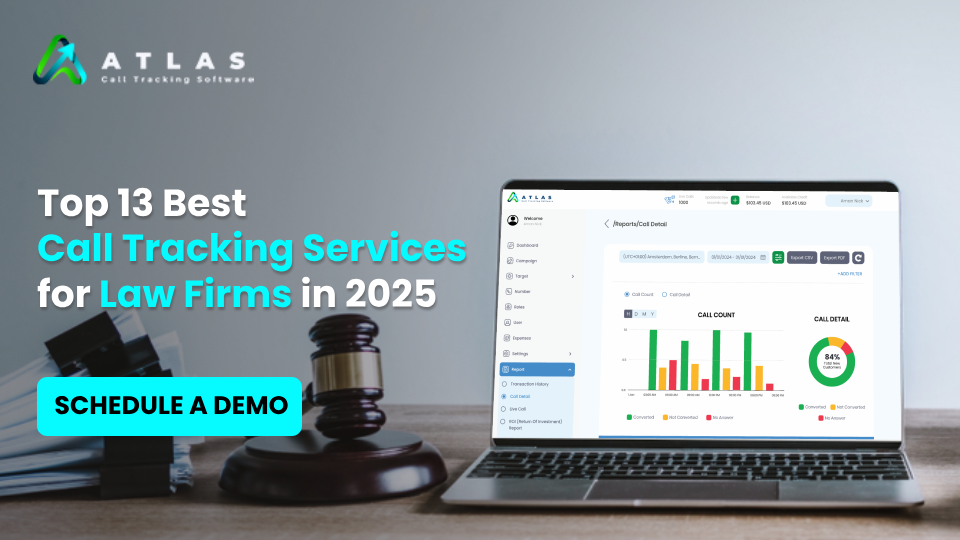
13 Best Call Tracking Software for Law Firms in 2025

Law firms rely heavily on phone calls for client consultations, case inquiries, and lead generation. Call tracking solutions help legal professionals monitor call performance, optimize marketing campaigns, and improve client communication. The right call tracking service ensures data security, call attribution, and compliance with legal industry regulations. Here’s a list of the 13 best call tracking software for law firms, along with their features, pricing, G2 ratings, and what they’re best suited for. 🚀 Sign up Today And Get $49 Free Credit! – Contact Us What is Call Tracking for Law Firms? Call tracking is a technology that allows law firms to monitor and analyze inbound and outbound calls to gain insights into their marketing performance, client interactions, and operational efficiency. By using call tracking software, firms can assign unique phone numbers to different marketing campaigns, enabling them to track which channels generate the most leads. Additionally, advanced call tracking solutions provide call recording, keyword attribution, and AI-driven analytics to improve client engagement and streamline communication processes. Why Do Law Firms Need Call Tracking? Law firms operate in a highly competitive environment, where client acquisition and retention are crucial for success. Call tracking helps firms understand which marketing strategies are delivering results, allowing them to allocate their budgets effectively. Without call tracking, firms may struggle to determine whether their leads come from organic search, paid ads, social media, or referral networks. By implementing a call tracking system, law firms can measure their return on investment (ROI), optimize marketing campaigns, and enhance client experience through better call handling. Who Can Benefit from Call Tracking in Legal Law Firms Services? Call tracking is beneficial for various professionals and entities within the legal industry, including: Benefits of Call Tracking for Law Firms Implementing a call tracking system can provide law firms with numerous advantages, including: How Does Call Tracking Software Work for Law Firms? Call tracking software works by assigning unique phone numbers to different marketing channels, enabling law firms to track which sources drive the most calls. When a potential client calls one of these numbers, the software captures essential data, such as the caller’s number, call duration, and call recording. The system then attributes the call to the specific marketing campaign, helping firms assess the effectiveness of their advertising efforts. Advanced call tracking solutions utilize AI-powered analytics to evaluate caller intent and sentiment, offering deeper insights into client behavior. Additionally, integration with CRM systems ensures that all client interactions are logged for better follow-up and case management. By leveraging these features, law firms can enhance lead generation, improve client communication, and optimize their marketing spend. Key Features of Call Tracking for Law Firms When selecting a call tracking system, law firms should look for the following essential features: How to Pick the Right Call Tracking Software for Your Law Firm Choosing the right call tracking software for your law firm requires careful consideration of several factors. Start by evaluating your firm’s specific needs, such as tracking call sources, recording conversations, or integrating with existing CRM systems. Look for software that offers dynamic number insertion, AI-driven analytics, and call attribution to gain deeper insights into client behavior. Additionally, consider the scalability of the solution, ensuring it can grow with your firm’s needs. Security and compliance features are also critical, as law firms must protect client data and adhere to industry regulations. By assessing these factors, you can select a call tracking solution that maximizes your firm’s efficiency and marketing effectiveness. Details Information about the 13 best call tracking software for law firms 1. CallRail CallRail is a popular call tracking software that helps law firms track and analyze inbound calls effectively. It provides in-depth insights into marketing performance and call quality. Features: Pricing: Starts at $45/month G2 Rating: 4.5/5 Best For: Small to medium-sized law firms looking for easy-to-use call tracking solutions. 🚀 Sign up Today And Get $49 Free Credit! – Contact Us 2. Atlas by CallAtlas Atlas provides precise call attribution and analytics, making it an excellent choice for law firms looking to track marketing effectiveness and client interactions. Features: Pricing: Custom pricing (contact sales) G2 Rating: 4.5/5 Best For: Law firms seeking precise call tracking and attribution for their marketing efforts. 3. CallTrackingMetrics CallTrackingMetrics provides advanced call analytics, automation, and reporting tools that help law firms optimize their marketing efforts and improve client acquisition. Features: Pricing: Starts at $39/month G2 Rating: 4.4/5 Best For: Law firms requiring a robust call tracking solution with automation features. 4. Invoca Invoca leverages AI-driven call analytics to provide deep insights into phone conversations, helping law firms improve lead quality and marketing performance. Features: Pricing: Custom pricing G2 Rating: 4.4/5 Best For: Large law firms looking for AI-driven call tracking solutions. 5. DialogTech DialogTech specializes in AI-powered call tracking and analytics, enabling law firms to gain real-time insights into client calls and optimize marketing campaigns. Features: Pricing: Custom pricing G2 Rating: 4.3/5 Best For: Law firms optimizing ad campaigns and lead generation efforts. 6. Marchex Marchex offers AI-powered conversation analytics and call tracking to help law firms gain actionable insights from client calls. Features: Pricing: Custom pricing G2 Rating: 4.2/5 Best For: Law firms focusing on call analytics and data-driven decision-making. 7. Ringba Ringba provides a flexible call tracking platform with real-time analytics and pay-as-you-go pricing, making it a great option for cost-conscious law firms. Features: Pricing: Pay-as-you-go; custom pricing available G2 Rating: 4.3/5 Best For: Law firms looking for budget-friendly and scalable call tracking solutions. 8. Twilio Twilio offers programmable voice and messaging services that enable law firms to build custom call tracking solutions tailored to their needs. Features: Pricing: Starts at $0.0085/minute G2 Rating: 4.6/5 Best For: Law firms requiring highly customizable call tracking solutions. 9. Phonexa honexa combines call tracking with marketing automation, making it a powerful solution for law firms handling multiple lead sources. Features: Pricing: Custom pricing G2 Rating: 4.3/5 Best For: Law firms managing extensive marketing campaigns and lead sources. 10. WhatConverts WhatConverts offers call tracking and lead management

13 Best Call Tracking Software for Law Firms in 2025 Read More »