
In today’s performance-driven marketing landscape, phone calls remain one of the highest-converting channels for businesses across industries like real estate, healthcare, finance, and SaaS. While digital clicks and form fills are easy to measure, inbound calls often carry higher intent and stronger buying signals—making them incredibly valuable. However, without the right tools, tracking, analyzing, and optimizing these calls can be a major challenge.
This is where call tracking software becomes essential.
Modern call tracking platforms go far beyond just recording calls. In 2026, they offer advanced attribution, AI-powered conversation intelligence, real-time analytics, and seamless integrations with CRM and marketing tools. These platforms help businesses understand exactly which campaigns, keywords, and channels are driving phone calls, enabling smarter budget allocation and higher ROI.
Whether you are a small business owner trying to track local campaigns, a marketing agency managing multiple clients, or a large enterprise optimizing customer journeys, the right call tracking solution can transform how you measure and scale performance.
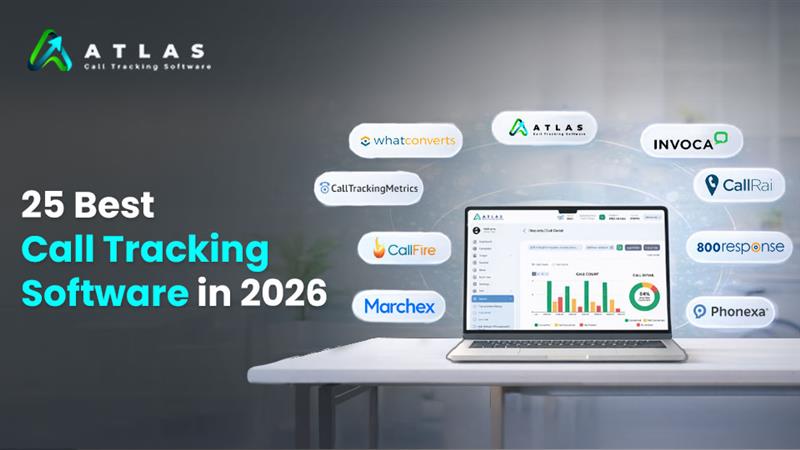
In this comprehensive guide, we’ve covered the 25 best call tracking tools in 2026 with highlighting their platforms, unique strengths, features, and use cases. From AI-driven analytics tools to pay-per-call platforms and all-in-one communication systems, this list will help you find the perfect fit for your business needs.
Quick Comparison Table: 25 Best Call Tracking Software (2026)
| Software | Core Strength | Best For |
|---|---|---|
| CallAtlas | Call tracking, routing + recording | Agencies, networks, performance marketers |
| CallRail | Easy-to-use + AI insights | SMBs, marketing teams |
| Invoca | AI conversation intelligence | Enterprises |
| CallTrackingMetrics | Multi-channel tracking | Agencies, mid-size businesses |
| Ringba | Call routing + marketplace | Pay-per-call platforms |
| WhatConverts | Lead tracking (calls + forms) | Agencies, lead gen |
| CallFire | Basic tracking + communication | Small businesses |
| CallHippo | Cloud telephony + tracking | Sales & support teams |
| PhoneWagon | Simple & fast setup | Freelancers, SMBs |
| Infinity | Advanced analytics + attribution | Data-driven teams |
| DialogTech (Invoca) | Enterprise AI analytics | Large enterprises |
| Convirza | AI call scoring | Marketing teams |
| Marchex | AI + sentiment analysis | Enterprise, telecom |
| AvidTrak | Simple campaign tracking | SMBs |
| Phonexa (Call Logic) | Lead distribution + tracking | Lead gen companies |
| ActiveDEMAND | Marketing automation + tracking | B2B, agencies |
| CallAction | Lead follow-up automation | Real estate, lead gen |
| Ricochet360 | CRM + call tracking | Sales teams |
| 800.com | Toll-free tracking | Local businesses |
| EngageBay | CRM + call tracking (budget) | Startups |
| CallScaler | Marketing attribution | Agencies |
| CallTracking.ai | AI conversation analytics | Data-driven marketers |
| Teldrip | Lightweight tracking | Freelancers |
| JustCall | Cloud phone + tracking | Sales/support teams |
| Aircall | Call center + integrations | Support teams, enterprises |
1. What is Call Tracking?
Call tracking is a method used by businesses to monitor, record, and analyze incoming phone calls to understand where they are coming from and how they contribute to conversions. It connects offline interactions (phone calls) with online and offline marketing efforts.
At its core, call tracking assigns unique phone numbers to different campaigns, channels, or sources. When a customer calls a specific number, the system captures data such as:
- Call source (Google Ads, website, social media, etc.)
- Caller details (location, device, behavior)
- Call duration and outcome
- Recording and conversation insights
This allows businesses to treat phone calls like any other trackable marketing conversion, similar to clicks or form submissions.
2. How Call Tracking Works
Call tracking works through a combination of number assignment, routing, and analytics. Here’s a simple breakdown:
Step 1: Number Assignment
Unique phone numbers are assigned to:
- Marketing campaigns
- Keywords
- Traffic sources
- Landing pages
Step 2: Call Routing
When a user dials a number, the system:
- Routes the call to the correct department or agent
- Logs the source and campaign details
Step 3: Data Collection
The platform collects:
- Call time and duration
- Caller location and device
- Call recordings
Step 4: Analytics & Reporting
All data is processed into dashboards showing:
- Which campaigns drive calls
- Which calls convert into leads or sales
- ROI of each marketing channel
3. Types of Call Tracking
1. Static Call Tracking
- Uses fixed phone numbers
- Assigns one number per campaign or channel
- Simple but limited in detail
2. Dynamic Call Tracking
- Uses dynamic number insertion (DNI)
- Displays different numbers to different users based on their source
- Tracks keyword-level and session-level data
3. Multi-Channel Tracking
- Tracks calls from multiple sources
- Includes website, ads, email, and offline campaigns
4. Call Attribution Tracking
- Connects calls to the full customer journey
- Shows touchpoints before the call
4. Why Call Tracking is Important
1. Measures True Marketing ROI
Many high-intent customers prefer calling over filling forms. Call tracking ensures these conversions are not missed.
2. Identifies High-Performing Channels
You can clearly see:
- Which campaigns generate calls
- Which keywords drive high-quality leads
3. Improves Lead Quality
By analyzing calls, businesses can:
- Filter spam or low-quality leads
- Focus on high-converting traffic
4. Enhances Customer Experience
Call routing ensures:
- Faster response times
- Calls reach the right agent
5. Supports Data-Driven Decisions
Marketers can make decisions based on real data instead of assumptions.
5. Key Features of Call Tracking Systems
1. Call Recording
- Records conversations for analysis
- Helps in training and quality control
2. Call Attribution
- Tracks which campaign or keyword led to the call
3. Dynamic Number Insertion (DNI)
- Automatically changes numbers based on visitor source
4. Call Routing
- Directs calls based on rules (location, time, intent)
5. Analytics Dashboard
- Visual reports for performance tracking
6. CRM Integration
- Syncs call data with customer records
7. AI & Conversation Intelligence
- Transcribes calls
- Detects keywords, sentiment, and intent
6. Call Tracking vs Traditional Analytics
| Feature | Traditional Analytics | Call Tracking |
|---|---|---|
| Tracks phone calls | ❌ No | ✅ Yes |
| Tracks online clicks | ✅ Yes | ✅ Yes |
| Measures offline conversions | ❌ Limited | ✅ Strong |
| Provides conversation insights | ❌ No | ✅ Yes |
| Attribution accuracy | Medium | High |
7. Use Cases Across Industries
1. Real Estate
- Track calls from property listings
- Identify high-converting locations
2. Healthcare
- Monitor appointment calls
- Improve patient acquisition
3. Finance & Insurance
- Track high-value inquiries
- Optimize lead generation campaigns
4. E-commerce
- Support high-ticket purchases via calls
- Improve customer trust
5. SaaS & B2B
- Track demo and consultation calls
- Measure campaign effectiveness
8. Benefits of Call Tracking
- Better marketing attribution
- Higher conversion rates
- Improved customer insights
- Optimized ad spend
- Enhanced sales performance
9. Challenges in Call Tracking
1. Number Management
Managing multiple numbers can become complex without proper setup.
2. Data Accuracy
Incorrect configuration can lead to inaccurate attribution.
3. Privacy & Compliance
Recording calls requires compliance with local laws and regulations.
4. Integration Complexity
Connecting with CRM and marketing tools may require technical setup.
10. Best Practices for Call Tracking
1. Use Dynamic Tracking
Always prefer dynamic number insertion for detailed insights.
2. Track All Channels
Include both online and offline campaigns.
3. Analyze Call Quality
Don’t just track volume—focus on conversion quality.
4. Train Teams Using Call Data
Use recordings to improve sales and support performance.
5. Integrate with Marketing Stack
Connect with CRM, ad platforms, and analytics tools for full visibility.
11. Future Trends in Call Tracking (2026 & Beyond)
1. AI-Powered Insights
- Automated call scoring
- Predictive analytics
2. Voice Analytics
- Deeper understanding of customer intent
- Real-time recommendations
3. Omnichannel Attribution
- Unified tracking across calls, chats, and messages
4. Automation & Smart Routing
- AI-based call routing based on intent
5. Privacy-First Tracking
- Better compliance with data protection laws
12. How to Choose the Right Call Tracking Approach
When implementing call tracking, consider:
- Business size (startup vs enterprise)
- Call volume (low vs high volume)
- Marketing channels used
- Need for AI and automation
- Integration requirements
The right setup depends on whether your focus is:
- Marketing attribution
- Sales optimization
- Customer experience
Here is the detailed description about the top 25 best call tracking software in 2026
1. CallAtlas
Overview
CallAtlas is an advanced call tracking and pay-per-call platform built for marketers, agencies, and inbound call-driven businesses. It focuses heavily on call attribution, campaign optimization, and publisher management, making it a strong choice in the 2026 ecosystem.
Key Features
- Advanced call attribution (keyword, campaign, channel-level)
- Real-time call routing and tracking
- Call recording and analytics dashboard
- Multi-publisher and affiliate management
- CRM integrations and API access
- Global virtual numbers
Pros and Cons
Pros:
- Strong focus on ROI-driven marketing insights
- Built for pay-per-call ecosystems
- Scalable for agencies and networks
Cons:
- Slight learning curve for new users
Why Choose It
If your business depends on inbound calls + performance marketing, CallAtlas provides one of the most complete ecosystems combining tracking, routing, and monetization.
Best For
- Pay-per-call networks
- Marketing agencies
- Lead generation businesses
2. CallRail
Overview
CallRail is one of the most popular call tracking tools, known for its ease of use and strong conversation intelligence features for marketers.
Key Features
- Dynamic Number Insertion (DNI)
- AI conversation intelligence and transcription
- Call recording and keyword tracking
- Lead center for managing calls and forms
- Integrations with Google Ads, HubSpot, etc.
Pros and Cons
Pros:
- Beginner-friendly interface
- Powerful marketing attribution
- Strong AI insights
Cons:
- Pricing increases with usage
- Limited customization for enterprises
Why Choose It
Great balance of simplicity + AI-powered insights, making it ideal for teams that want quick setup and results.
Best For
- SMBs
- Digital marketing agencies
3. Invoca
Overview
Invoca is an enterprise-grade call tracking and analytics platform that uses AI to analyze conversations and optimize marketing performance.
Key Features
- AI-driven conversation analytics
- Call attribution and campaign tracking
- Fraud detection tools
- Real-time call routing
- Enterprise CRM integrations
Pros and Cons
Pros:
- Advanced AI insights
- Enterprise scalability
- Strong fraud prevention
Cons:
- Expensive
- Complex setup
Why Choose It
Perfect for businesses that need deep AI insights and large-scale campaign optimization.
Best For
- Enterprises
- Healthcare, finance, telecom
4. CallTrackingMetrics
Overview
CallTrackingMetrics is a multi-channel tracking platform that tracks calls, texts, forms, and chats in one system.
Key Features
- Multi-channel tracking (calls, SMS, chat, forms)
- Smart call routing and IVR
- Marketing attribution tools
- Automation workflows
- CRM and ad integrations
Pros and Cons
Pros:
- All-in-one communication tracking
- Flexible automation
- Strong integrations
Cons:
- Interface can feel complex
- Learning curve for beginners
Why Choose It
Ideal if you want one platform to manage all customer touchpoints, not just calls.
Best For
- Mid-sized businesses
- Agencies managing multiple channels
5. Ringba
Overview
Ringba is a powerful call tracking and routing platform designed specifically for pay-per-call marketers and affiliate networks.
Key Features
- Real-time call routing engine
- Call marketplace and buyer routing
- Advanced analytics and reporting
- API-first architecture
- Publisher and campaign management
Pros and Cons
Pros:
- Built for performance marketing
- Highly customizable routing
- Strong analytics
Cons:
- Not beginner-friendly
- Requires technical knowledge
Why Choose It
If you are building a call marketplace or affiliate-driven ecosystem, Ringba is one of the best tools available.
Best For
- Pay-per-call platforms
- Affiliate marketers
6. WhatConverts
Overview
WhatConverts is a lead tracking and call tracking software that helps businesses track calls, forms, chats, and eCommerce transactions in one place. It’s known for its strong lead reporting and attribution capabilities.
Key Features
- Call tracking with recording and attribution
- Lead tracking across forms, chats, and calls
- Detailed lead reports and analytics
- Keyword-level tracking
- Integrations with Google Ads and CRM tools
Pros and Cons
Pros:
- Excellent lead reporting dashboard
- Tracks multiple conversion types
- Easy integration with ad platforms
Cons:
- UI feels slightly outdated
- Limited automation compared to competitors
Why Choose It
If your focus is on lead tracking + attribution (not just calls), WhatConverts gives a clear picture of what’s driving conversions.
Best For
- Agencies
- Lead generation businesses
7. CallFire
Overview
CallFire is a cloud-based communication platform offering call tracking, IVR, and SMS marketing tools. It’s simple, affordable, and effective for basic call tracking needs.
Key Features
- Call tracking and recording
- IVR (Interactive Voice Response)
- SMS marketing campaigns
- Voice broadcasting
- API access for developers
Pros and Cons
Pros:
- Budget-friendly
- Easy to set up
- Good for basic use cases
Cons:
- Limited advanced analytics
- Not ideal for large-scale campaigns
Why Choose It
Best if you need a simple and cost-effective call tracking + communication tool.
Best For
- Small businesses
- Startups
8. CallHippo
Overview
CallHippo is a virtual phone system with built-in call tracking features, designed for sales and support teams looking to improve communication efficiency.
Key Features
- Call tracking and analytics
- Virtual phone numbers (global coverage)
- Call recording and monitoring
- Power dialer and call queues
- CRM integrations
Pros and Cons
Pros:
- Easy to use
- Affordable pricing tiers
- Strong for sales teams
Cons:
- Limited deep attribution features
- Not built specifically for marketers
Why Choose It
Great for businesses that want call tracking combined with a cloud telephony system.
Best For
- Sales teams
- Customer support teams
9. PhoneWagon
Overview
PhoneWagon is a simple and fast call tracking solution that focuses on ease of use and quick deployment for marketing teams.
Key Features
- Dynamic number insertion
- Call recording and reporting
- Real-time notifications
- Google Ads integration
- Simple dashboard
Pros and Cons
Pros:
- Very user-friendly
- Quick setup
- Transparent pricing
Cons:
- Limited advanced features
- Not suitable for enterprise use
Why Choose It
Perfect if you want a no-fuss call tracking solution that works out of the box.
Best For
- Small businesses
- Freelancers
10. Infinity (Infinity Call Tracking)
Overview
Infinity is a powerful call tracking and conversation intelligence platform that helps businesses understand customer behavior and improve marketing ROI.
Key Features
- Dynamic call tracking and attribution
- AI-powered conversation analytics
- Real-time dashboards
- Visitor journey tracking
- CRM and marketing integrations
Pros and Cons
Pros:
- Strong analytics and insights
- Good for data-driven teams
- Flexible integrations
Cons:
- Premium pricing
- Requires setup effort
Why Choose It
If your goal is deep customer journey insights and data-driven optimization, Infinity is a strong contender.
Best For
- Medium to large businesses
- Data-driven marketing teams
11. DialogTech (Now part of Invoca)
Overview
DialogTech, now integrated into Invoca, was a leading AI-powered call tracking and conversation analytics platform. It continues to influence enterprise-level solutions with strong data and attribution capabilities.
Key Features
- AI-driven call analytics
- Marketing attribution across channels
- Call recording and transcription
- Audience targeting insights
- Enterprise integrations
Pros and Cons
Pros:
- Advanced AI capabilities
- Strong enterprise features
- Deep marketing insights
Cons:
- No longer standalone (merged with Invoca)
- Expensive for smaller teams
Why Choose It
Choose this (via Invoca) if you need enterprise-grade conversation intelligence and attribution.
Best For
- Enterprises
- Large marketing teams
12. Convirza
Overview
Convirza is a call tracking platform focused on conversation analytics and AI-driven insights to improve marketing performance and sales conversions.
Key Features
- AI call scoring and analytics
- Call tracking and attribution
- Call recording and alerts
- Campaign performance insights
- Custom reporting tools
Pros and Cons
Pros:
- Strong AI call scoring
- Good reporting features
- Focus on conversion improvement
Cons:
- UI can feel outdated
- Limited integrations compared to competitors
Why Choose It
Ideal if you want AI insights specifically focused on improving call conversions.
Best For
- Marketing teams
- Performance-driven businesses
13. Marchex
Overview
Marchex is a call analytics platform that uses AI and machine learning to analyze customer conversations and deliver actionable insights.
Key Features
- AI-powered conversation intelligence
- Call tracking and attribution
- Sentiment analysis
- Sales and marketing insights
- Industry-specific solutions
Pros and Cons
Pros:
- Strong AI and ML capabilities
- Great for conversation insights
- Scalable for large organizations
Cons:
- Enterprise-focused pricing
- Complex onboarding
Why Choose It
Perfect for companies that want to analyze customer intent and sentiment at scale.
Best For
- Enterprises
- Automotive, healthcare, and telecom sectors
14. AvidTrak
Overview
AvidTrak is a call tracking solution designed to help businesses measure marketing effectiveness and customer engagement through calls.
Key Features
- Call tracking and recording
- Campaign attribution
- Real-time analytics
- Call routing and IVR
- Integration with marketing tools
Pros and Cons
Pros:
- Easy to use
- Good analytics for SMBs
- Affordable pricing
Cons:
- Limited advanced AI features
- Not ideal for large enterprises
Why Choose It
A solid choice if you want reliable call tracking without unnecessary complexity.
Best For
- Small to mid-sized businesses
- Agencies
15. Phonexa (Call Logic)
Overview
Phonexa’s Call Logic is part of a full marketing automation suite that includes call tracking, lead distribution, and analytics tools.
Key Features
- Call tracking and routing
- Lead distribution system
- Multi-channel marketing tools
- Real-time analytics
- CRM integrations
Pros and Cons
Pros:
- All-in-one marketing suite
- Strong lead management features
- Scalable platform
Cons:
- Complex interface
- Requires onboarding time
Why Choose It
Best if you want call tracking combined with a full marketing automation ecosystem.
Best For
- Lead generation companies
- Performance marketers
16. ActiveDEMAND
Overview
ActiveDEMAND is a full-stack marketing automation platform with strong call tracking, email marketing, and CRM capabilities. It focuses on helping businesses manage multi-channel campaigns from one dashboard.
Key Features
- Call tracking with attribution
- Marketing automation workflows
- Email marketing + landing pages
- CRM and sales tracking
- Campaign analytics
Pros and Cons
Pros:
- All-in-one marketing suite
- Strong automation features
- Good reporting capabilities
Cons:
- Slightly complex for beginners
- Pricing can increase with scale
Why Choose It
Choose ActiveDEMAND if you want call tracking + full marketing automation in one platform.
Best For
- Marketing agencies
- B2B companies
17. CallAction
Overview
CallAction is a call tracking and lead management tool designed to automate follow-ups and improve lead conversion rates through calls, texts, and emails.
Key Features
- Call tracking and routing
- Automated SMS and email follow-ups
- Lead capture and scoring
- CRM integrations
- Performance analytics
Pros and Cons
Pros:
- Strong automation for follow-ups
- Improves lead conversion
- Multi-channel communication
Cons:
- UI can feel outdated
- Limited advanced analytics
Why Choose It
Best if your focus is turning inbound calls into qualified leads automatically.
Best For
- Real estate
- Lead generation businesses
18. Ricochet360
Overview
Ricochet360 is a call tracking + CRM platform that focuses on lead management, automation, and sales pipeline optimization.
Key Features
- Call tracking and recording
- Built-in CRM system
- Sales pipeline management
- Automated workflows
- Reporting and analytics
Pros and Cons
Pros:
- CRM + call tracking in one
- Good automation tools
- Useful for sales teams
Cons:
- Limited scalability for enterprises
- UI not very modern
Why Choose It
Choose this if you want call tracking tightly integrated with CRM and sales workflows.
Best For
- Sales teams
- Small to mid-sized businesses
19. 800.com
Overview
800.com is a call tracking and business phone solution focused on providing toll-free numbers with tracking and analytics features.
Key Features
- Toll-free number tracking
- Call analytics and reports
- Call forwarding and routing
- Voicemail and call recording
- Simple dashboard
Pros and Cons
Pros:
- Easy to use
- Affordable pricing
- Strong toll-free number management
Cons:
- Limited advanced features
- Not ideal for large-scale campaigns
Why Choose It
Perfect if you need simple call tracking with toll-free branding.
Best For
- Small businesses
- Local service providers
20. EngageBay
Overview
EngageBay is an all-in-one CRM platform that includes call tracking, marketing automation, and customer support tools. It’s a budget-friendly alternative to bigger CRM suites.
Key Features
- Built-in call tracking
- CRM and contact management
- Email marketing and automation
- Helpdesk and live chat
- Reporting and analytics
Pros and Cons
Pros:
- Affordable all-in-one platform
- Easy to use
- Good for startups
Cons:
- Limited advanced call analytics
- Fewer integrations than competitors
Why Choose It
Best for businesses looking for CRM + call tracking at a low cost.
Best For
- Startups
- Small businesses
21. CallScaler
Overview
CallScaler is a modern call tracking platform designed for marketers and agencies who need detailed insights into inbound calls and campaign performance. It emphasizes real-time analytics and easy integrations.
Key Features
- Dynamic number insertion (DNI)
- Call recording and analytics
- Campaign attribution tracking
- Integration with Google Ads and CRM tools
- Real-time reporting dashboard
Pros and Cons
Pros:
- Easy to use
- Good marketing attribution features
- Affordable for agencies
Cons:
- Limited enterprise-level capabilities
- Fewer automation features
Why Choose It
A great option if you want simple but effective call tracking with solid attribution insights.
Best For
- Marketing agencies
- SMBs
22. CallTracking.ai
Overview
CallTracking.ai is an AI-powered call tracking platform that focuses on conversation intelligence, automation, and marketing optimization.
Key Features
- AI-based call transcription and analysis
- Call tracking and routing
- Keyword and sentiment analysis
- Integration with marketing tools
- Automation workflows
Pros and Cons
Pros:
- Strong AI capabilities
- Useful conversation insights
- Helps improve campaign performance
Cons:
- Pricing can be high
- Requires setup for full utilization
Why Choose It
Choose this if you want AI-driven insights to optimize both marketing and sales calls.
Best For
- Data-driven marketing teams
- Performance marketers
23. Teldrip
Overview
Teldrip is a lightweight call tracking solution focused on simplicity and performance tracking for inbound calls. It’s a newer tool gaining traction among small teams.
Key Features
- Call tracking and recording
- Basic attribution analytics
- Real-time call notifications
- Simple dashboard
- Affordable pricing plans
Pros and Cons
Pros:
- Beginner-friendly
- Low cost
- Quick setup
Cons:
- Limited advanced features
- Not suitable for scaling businesses
Why Choose It
Perfect if you want a minimal and easy-to-use call tracking tool without complexity.
Best For
- Freelancers
- Small businesses
24. JustCall
Overview
JustCall is a cloud phone system with integrated call tracking features, designed to improve sales and customer communication workflows.
Key Features
- Call tracking and recording
- SMS and voice automation
- Power dialer and call queues
- CRM integrations
- Analytics dashboard
Pros and Cons
Pros:
- Strong communication features
- Easy CRM integration
- Scalable for growing teams
Cons:
- Not purely a marketing attribution tool
- Limited deep analytics
Why Choose It
Ideal if you need call tracking combined with a powerful cloud phone system.
Best For
- Sales teams
- Customer support teams
25. Aircall
Overview
Aircall is a popular cloud-based call center solution with built-in call tracking features, widely used for sales and support operations.
Key Features
- Cloud-based call tracking
- Call monitoring and recording
- IVR and call routing
- CRM and helpdesk integrations
- Real-time analytics
Pros and Cons
Pros:
- Excellent UI/UX
- Strong integrations
- Reliable call quality
Cons:
- Expensive for small teams
- Limited marketing attribution features
Why Choose It
Choose Aircall if your priority is team communication and customer experience with tracking capabilities.
Best For
- Call centers
- Customer support teams
Conclusion
Choosing the right call tracking platform is no longer just about tracking calls—it’s about unlocking insights, improving conversions, and scaling revenue. As seen across these 25 tools, the market now offers a wide range of solutions tailored to different needs—from simple and budget-friendly tools for startups to advanced AI-powered platforms for enterprises and performance marketers.
If your focus is on marketing attribution and campaign optimization, tools like CallAtlas, CallRail, and WhatConverts stand out. For businesses looking for deep AI insights and conversation intelligence, platforms like Invoca, Marchex, and CallTracking.ai provide powerful capabilities. Meanwhile, if you need call tracking combined with CRM or communication systems, solutions like Aircall, JustCall, and EngageBay offer strong value.
The key is to align your choice with your business model, scale, and goals:
- Focus on attribution if you run paid campaigns
- Focus on routing and monetization if you’re in pay-per-call
- Focus on communication if your priority is sales/support
As inbound calls continue to play a critical role in customer acquisition, investing in the right platform will give you a competitive edge in understanding your audience, optimizing campaigns, and driving higher ROI.
Ultimately, the best tool is the one that not only tracks calls—but helps you turn every conversation into measurable growth.
Frequently Asked Questions
Call tracking software helps businesses track, record, and analyze phone calls to understand which marketing campaigns, keywords, or channels are driving inbound calls.
It helps measure ROI by showing exactly which campaigns generate calls, allowing businesses to optimize ad spend and improve conversions.
The best tool depends on your needs—CallAtlas for pay-per-call, CallRail for ease of use, and Invoca for AI-powered enterprise insights.
Yes, most modern platforms integrate with CRMs like HubSpot, Salesforce, and Google Ads to provide a complete view of customer journeys.
Absolutely. Many tools offer affordable plans and simple setups, making them ideal for startups and small businesses.