
In today’s digital world, phone calls are still one of the most powerful ways customers connect with businesses. Whether someone is calling after seeing an ad, visiting a website, or finding a business on Google, that call often shows strong buying intent. But many businesses still don’t know where their calls are coming from, which campaigns are working, or which calls actually turn into sales.
This is where call tracking tools become extremely important. These apps help businesses see who is calling, why they are calling, and what happens after the call. With proper call tracking, companies can improve marketing decisions, train sales teams better, reduce missed opportunities, and increase overall revenue. Instead of guessing, businesses can make decisions based on real data.
In this blog, we have listed the 15 Best Call Tracking Android Apps in 2026 to Track, Analyze & Convert More Calls, covering tools suitable for startups, growing businesses, agencies, and large enterprises. Each app offers different features such as call analytics, recordings, attribution, routing, and performance insights to help businesses grow smarter and faster.
What Is Call Tracking?
Call tracking is a method used by businesses to understand where phone calls are coming from and what happens during those calls. It works by assigning different phone numbers to marketing channels like ads, websites, social media, or offline campaigns. When a customer calls one of these numbers, the system records the source and call details.
Call tracking also collects information such as call time, duration, caller location, and call outcome. Some systems even record conversations to help businesses review quality and performance. This data helps companies understand customer behavior and improve decision-making.
Why Call Tracking Is Important for Businesses
Many customers still prefer calling before making a purchase, especially for high-value services. Without call tracking, businesses cannot know which campaigns generate calls or which calls turn into sales.
Call tracking helps businesses:
- Identify high-performing marketing channels
- Reduce wasted advertising spend
- Improve customer experience
- Increase sales team efficiency
- Understand customer intent and needs
By tracking calls, businesses stop guessing and start using real data to grow revenue and improve results.
How Call Tracking Works
Call tracking works by using unique phone numbers linked to different marketing sources. When someone sees an ad or visits a website, a specific number is shown. When that number is dialed, the system records the source automatically.
The process generally includes:
- Assigning tracking numbers to campaigns
- Routing calls to the right team or agent
- Recording call details and conversations
- Analyzing performance through dashboards
This allows businesses to connect calls directly to marketing efforts and sales outcomes.
Why Call Tracking Apps Are Important in Today’s Business World
In a time where businesses spend heavily on digital marketing, knowing what actually works is critical. Call tracking apps help businesses connect phone calls to real marketing efforts, giving clear visibility into customer actions. Without call tracking, phone calls become invisible data, making it difficult to measure success.
Call tracking apps help businesses understand customer intent better than forms or clicks. A phone call often shows higher interest, and tracking these calls helps teams focus on leads that matter most. Businesses can see which campaigns generate quality calls and which ones need improvement.
These apps also improve accountability across marketing and sales teams. Marketing teams can prove the value of their campaigns, while sales teams can improve call handling and follow-up strategies. Over time, this leads to better teamwork, higher conversion rates, and improved customer trust.
In competitive markets, call tracking apps are no longer optional. They are essential tools that help businesses reduce wasted spend, improve customer experience, and make smarter growth decisions based on real data.
Key Metrics Businesses Can Track Using Call Tracking App
Call tracking provides valuable insights through different metrics, including:
- Call volume per campaign
- Call duration and timing
- Missed vs answered calls
- Lead quality and conversion rates
- Agent performance and response time
These metrics help businesses improve both marketing strategies and customer handling processes.
How Call Tracking Helps Improve Marketing ROI
Call tracking shows exactly which ads, keywords, or campaigns generate phone leads. This allows marketers to invest more in high-performing channels and stop spending on low-performing ones.
With call data, businesses can:
- Optimize paid advertising campaigns
- Improve landing pages and messaging
- Align marketing and sales teams
- Measure true return on investment
This leads to smarter marketing decisions and better budget allocation.
How Sales Teams Benefit from Call Tracking
Sales teams gain full visibility into call history and caller intent before answering calls. This helps them prepare better and respond more effectively.
Benefits include:
- Better call handling and follow-ups
- Improved lead prioritization
- Training opportunities using call recordings
- Performance monitoring and coaching
As a result, sales teams close more deals and provide better customer experiences.
Call Tracking for Customer Experience Improvement
Call tracking helps businesses understand common customer questions, concerns, and pain points. By analyzing calls, companies can improve scripts, processes, and support quality.
It also helps reduce missed calls, long wait times, and poor call routing, leading to higher customer satisfaction and trust.
Who Should Use Call Tracking?
Call tracking is useful for:
- Small and medium businesses
- Marketing agencies
- Service-based companies
- E-commerce brands with phone sales
- Enterprises handling high call volumes
Any business that relies on phone calls for leads or sales can benefit from call tracking.
Future of Call Tracking in 2026 and Beyond
Call tracking is evolving with advanced analytics and automation. Businesses are moving toward smarter call insights, better reporting, and improved integration with marketing and sales systems.
As competition increases, call tracking will become essential for understanding customer journeys and staying ahead in the market.
Comparison Table: Top 15 Call Tracking Apps in 2026 to Track, Analyze & Convert More Calls
| S.No | App Name | Key Feature Focus |
|---|---|---|
| 1 | CallAtlas | Mobile-first tracking, real-time analytics, campaign attribution |
| 2 | CallRail | Lead intelligence, conversation analytics, marketing attribution |
| 3 | CallTrackingMetrics | Unified communications, real-time alerts, caller context |
| 4 | WhatConverts | Multi-channel lead tracking, dynamic number insertion, call transcripts |
| 5 | Twilio | Customizable API, global numbers, programmable call routing |
| 6 | Convirza | Dynamic number insertion, real-time analytics, CRM integration |
| 7 | Ringba | Advanced call routing, real-time analytics, fraud detection |
| 8 | Invoca | AI-powered conversation analytics, marketing attribution, revenue insights |
| 9 | Phonexa | End-to-end call tracking, lead distribution, multi-channel tracking |
| 10 | CallHippo | Virtual numbers, cloud analytics, CRM integration |
| 11 | Grasshopper | Call forwarding, voicemail transcription, basic reporting |
| 12 | Aircall | Live call monitoring, call tagging, team collaboration |
| 13 | Talkdesk | AI-powered analytics, intelligent routing, performance dashboards |
| 14 | JustCall | Global numbers, call tracking & SMS, CRM integration |
| 15 | Freshcaller | Call monitoring, IVR routing, real-time analytics |
Here is the detailed description about the 15 best call tracking apps for 2026
1. CallAtlas – Best Call Tracking App
📱 Google Play Store: https://play.google.com/store/apps/details?id=com.callatlasio.atlas
Overview:
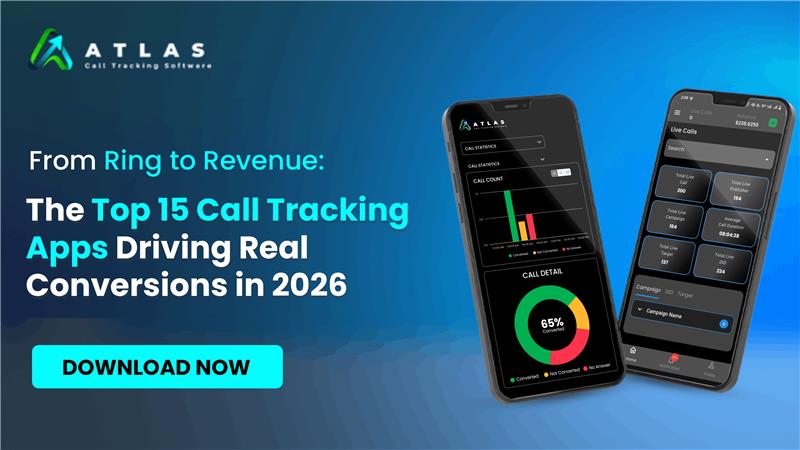
CallAtlas is emerging as one of the leading mobile call tracking app for businesses of all sizes in 2026, built specifically to help marketers and sales teams track, analyze, and convert calls efficiently. The app syncs call data in real time with a web dashboard and gives deep insights into caller behavior and performance.
Key Features:
- Real-Time Call Tracking: Instantly captures all incoming and outgoing call activity, so you never miss a lead.
- Campaign Attribution: Know exactly which marketing campaigns drove each call — from Google Ads to social media channels.
- Analytics & Conversion Insights: Built-in dashboards show call duration, live calls, call recording, outcomes, team response times, and conversion trends so you can optimize strategies.
- Team Performance Metrics: Track performance across sales reps, set goals, and identify coaching opportunities.
- Seamless Data Sync: All mobile app data syncs with the main CallAtlas account dashboard for unified reporting.
Best For: Sales teams, agencies, and SMBs that want mobile-first call tracking with real-time analytics and campaign insights.
2. CallRail
Overview: CallRail is a comprehensive call tracking and analytics platform used widely by marketers and small to midsize businesses. Its mobile companion app brings powerful insights to your phone so you can respond to leads on the go.
Key Features:
- Lead Intelligence: See call summaries, transcripts, and key caller data right on your device.
- Text & Call Integration: Send/receive texts and calls directly from the app — helping close deals faster.
- Conversation Intelligence: AI-enhanced summaries help detect trends and keywords in conversations.
- Dashboard Analytics: Monitor which campaigns or keywords are delivering the most valuable calls.
- Marketing Attribution: Connect call data to marketing sources (PPC, SEO, social, offline) for full campaign visibility.
Best For: Businesses that want deep campaign tracking and ROI insights tied directly to phone leads.
3. CallTrackingMetrics
Overview: CallTrackingMetrics combines powerful call tracking with conversation intelligence and marketing attribution. The Agent mobile app lets teams manage calls, texts, and chats from anywhere.
Key Features:
- Unified Communications: Answer calls, texts, and chats from the app — perfect for distributed sales teams.
- Real-Time Alerts: Get push notifications for new leads and client interactions.
- Caller Context: See caller source data and campaign info before answering.
- Call Recording & Notes: Capture conversation details and notes during or after calls.
- Marketing Attribution: Link calls back to keyword, channel, and campaign performance.
Best For: Marketing agencies and enterprise teams needing robust attribution and cross-channel analytics.
4. WhatConverts
Overview: WhatConverts is a versatile lead tracking platform that brings calls, forms, chats, and other lead types into one unified dashboard. It’s ideal for businesses and agencies that want multi-channel visibility alongside call tracking.
Top Features:
- Multi-Channel Lead Tracking: Combines phone calls with web forms, chats, and more so you see all lead sources in one place, not only calls.
- Dynamic Number Insertion (DNI): Ensures calls are tied to the correct ad or marketing source for accurate attribution.
- Call Recordings & Transcripts: Save and review conversations with searchable transcripts, improving agent training and validation.
- Automated Spam Blocking: Filters junk calls automatically for cleaner analytics.
- Custom Reporting & Alerts: Build tailored reports or set notifications based on lead behavior.
Best For: Marketers and agencies that need comprehensive lead attribution across channels, not just call tracking.
5. Twilio
Overview: Twilio isn’t a traditional plug-and-play call tracking app but a highly customizable communications platform that provides programmable voice and call analytics using APIs. It’s ideal for businesses that need fully bespoke call tracking and routing logic built into existing systems.
Top Features:
- Custom Call Tracking API: Build tailored call tracking, reporting, and number provisioning based on unique business logic.
- Global Tracking Number Inventory: Access local and toll-free numbers around the world to support international campaigns.
- IVR & Intelligent Routing: Create sophisticated call flows and automated menus before connecting to agents.
- Call Recording & Transcription: Record and convert calls to text, enabling deeper analysis.
- SMS & Chat Integration: Extend tracking insights into messaging channels or other voice channels.
Best For: Tech teams and enterprises that want fully customizable call tracking built into apps, dashboards, or CRMs.
6. Convirza
Overview: Convirza focuses on actionable call analytics and lead scoring — helping businesses measure ROI of calls and identify high-value leads using detailed conversation data.
Top Features:
- Dynamic Number Insertion: Attribute calls back to the exact marketing source or campaign.
- Real-Time Analytics Dashboard: Get call performance insights right when calls happen, enabling faster decisions.
- CRM Integrations: Sync call data with your CRM to unify phone leads with your broader sales pipeline.
- Custom Reporting: Create tailored visual dashboards highlighting metrics like call volume, conversion rates, and lead score trends.
- Call Routing & Recording: Route calls to the best agent and save recordings for compliance or coaching.
Best For: Small to mid-size businesses seeking actionable call scoring and ROI tracking, with CRM integration.
7. Ringba
Overview:
Ringba is a performance-focused call tracking and routing platform widely used in pay-per-call and high-volume inbound call environments. It is known for its real-time analytics and smart routing capabilities.
Key Features:
- Advanced Call Routing: Routes calls based on rules like geography, call quality, time, or buyer priority.
- Real-Time Call Analytics: Monitor live calls, conversion rates, and buyer performance instantly.
- Call Recording & Quality Control: Helps identify fraud, low-quality traffic, and improve lead quality.
- Traffic Source Tracking: Accurately tracks which campaigns, publishers, or ads drive the best calls.
- Scalable Infrastructure: Designed to handle thousands of calls daily without performance issues.
Best For: Pay-per-call marketers, affiliate networks, and businesses handling high call volumes.
8. Invoca
Overview:
Invoca is an enterprise-grade call tracking and conversation intelligence platform focused on connecting inbound calls with digital marketing performance and revenue attribution.
Key Features:
- AI-Powered Conversation Analytics: Uses AI to analyze call intent, sentiment, and outcomes.
- Marketing Attribution: Links phone calls to keywords, ads, and digital journeys.
- Call Recording & Transcription: Enables teams to review conversations for optimization and compliance.
- CRM & Marketing Tool Integration: Syncs call data with CRM and marketing platforms for unified reporting.
- Revenue Intelligence: Identifies which calls convert into actual sales and revenue.
Best For: Large businesses and enterprises focused on marketing ROI and revenue intelligence.
9. Phonexa
Overview:
Phonexa is a multi-channel performance marketing platform that includes strong call tracking capabilities alongside lead distribution and analytics tools.
Key Features:
- End-to-End Call Tracking: Tracks calls from acquisition to conversion with complete transparency.
- Call Routing & Lead Distribution: Automatically routes calls to the right buyers or sales agents.
- Fraud Detection: Identifies low-quality or suspicious call traffic.
- Custom Dashboards & Reports: Visualize call performance, buyer activity, and campaign ROI.
- Multi-Channel Tracking: Supports calls, forms, clicks, and other lead types in one system.
Best For: Performance marketers and agencies needing all-in-one lead and call tracking.
10. CallHippo
Overview:
CallHippo is a cloud-based business phone system with built-in call tracking features. It helps sales and support teams monitor call activity while improving customer communication.
Key Features:
- Virtual Phone Numbers: Get local and international numbers to track calls across regions.
- Call Analytics Dashboard: Track call volume, duration, missed calls, and agent performance.
- Call Recording: Record conversations for training, compliance, and quality assurance.
- Smart Call Routing: Automatically routes calls to the right agent or department.
- CRM Integrations: Syncs call data with popular CRM platforms for better lead management.
Best For: Sales and support teams looking for simple call tracking with cloud telephony.
11. Grasshopper
Overview:
Grasshopper is a virtual phone system designed for small businesses that want basic call tracking and professional call handling without complex setups.
Key Features:
- Call Forwarding: Route calls to mobile or desk phones easily.
- Voicemail Transcription: Converts voicemails into readable text.
- Call Reporting: Provides basic call logs and activity insights.
- Business Greetings & Extensions: Create a professional phone experience for callers.
- Mobile App Access: Manage calls from anywhere using a mobile device.
Best For: Small businesses and startups needing lightweight call tracking and call management.
12. Aircall
Overview:
Aircall is a modern cloud phone system built for sales and customer support teams, offering strong call tracking combined with collaboration tools.
Key Features:
- Live Call Monitoring: Track ongoing calls in real time.
- Call Tagging & Notes: Add notes and tags to calls for better follow-ups.
- Call Recording & Analytics: Analyze call performance and agent productivity.
- CRM & Helpdesk Integrations: Connect with tools like CRMs and support platforms.
- Team Collaboration: Share call insights across sales and support teams.
Best For: Growing teams that need collaborative call tracking with CRM integration.
13. Talkdesk
Overview:
Talkdesk is a cloud-based contact center platform with advanced call tracking and analytics features. It focuses heavily on customer experience and enterprise-level call management.
Key Features:
- Inbound & Outbound Call Tracking: Monitor customer interactions across sales and support teams.
- AI-Powered Call Analytics: Analyze conversations to identify trends, intent, and agent performance.
- Call Recording & Transcription: Capture and review calls for training and quality improvement.
- Intelligent Call Routing: Routes calls based on skills, availability, and priority.
- Performance Dashboards: Visualize KPIs like call resolution time and conversion rates.
Best For: Enterprises and large teams focused on customer experience and call intelligence.
14. JustCall
Overview:
JustCall is a cloud phone system with built-in call tracking designed for sales and support teams. It helps businesses track calls, automate workflows, and improve conversions.
Key Features:
- Local & International Numbers: Track calls from multiple regions globally.
- Call Monitoring & Recording: Review agent calls and improve performance.
- SMS & Call Tracking: Manage voice and text conversations in one platform.
- CRM Integrations: Automatically log call activity into CRM systems.
- Analytics & Reporting: Track call metrics such as response time and call outcomes.
Best For: Sales-driven teams that want call tracking with automation and CRM sync.
15. Freshcaller (Freshworks)
Overview:
Freshcaller is a cloud-based call center solution that includes essential call tracking and reporting features, integrated within the Freshworks ecosystem.
Key Features:
- Call Monitoring & Logging: Track inbound and outbound calls easily.
- Call Routing & IVR: Route calls intelligently using IVR menus.
- Call Recording: Store conversations for compliance and training.
- Real-Time Analytics: Monitor call queues, agent activity, and performance.
- Team Management Tools: Manage users, roles, and call workflows efficiently.
Best For: Businesses already using Freshworks tools and seeking integrated call tracking.
Conclusion:
Phone calls are not just conversations — they are valuable business opportunities. When tracked and analyzed properly, they can reveal what customers want, which marketing efforts are successful, and how sales teams can improve their performance. Without call tracking, businesses risk losing leads, wasting ad spend, and missing growth opportunities.
The tools listed in this blog offer a wide range of solutions, from mobile-first call tracking apps to advanced enterprise platforms. Some focus on simplicity and ease of use, while others provide deep analytics, automation, and AI-driven insights. The right choice depends on business size, goals, and call volume.
By using a reliable call tracking app, businesses can gain full visibility into their inbound and outbound calls, improve customer experience, and turn more conversations into conversions. As competition continues to grow in 2026, investing in the right call tracking solution is no longer optional — it’s a smart move for long-term success.
Frequently Asked Questions
A call tracking app helps businesses track incoming and outgoing phone calls, understand where calls come from, and measure call performance.
Call tracking shows which marketing efforts generate calls, helps reduce missed leads, and improves sales and customer service performance.
Yes, by analyzing call data, recordings, and outcomes, businesses can optimize campaigns and train teams to convert more callers into customers.
Yes, many call tracking apps are designed for small businesses and startups, offering simple setup and affordable pricing.
Choose an app based on call volume, required features, ease of use, integrations, and whether you need basic tracking or advanced analytics.